
How to Interpret Your Full body checkup in Kolkata Report Without Panic
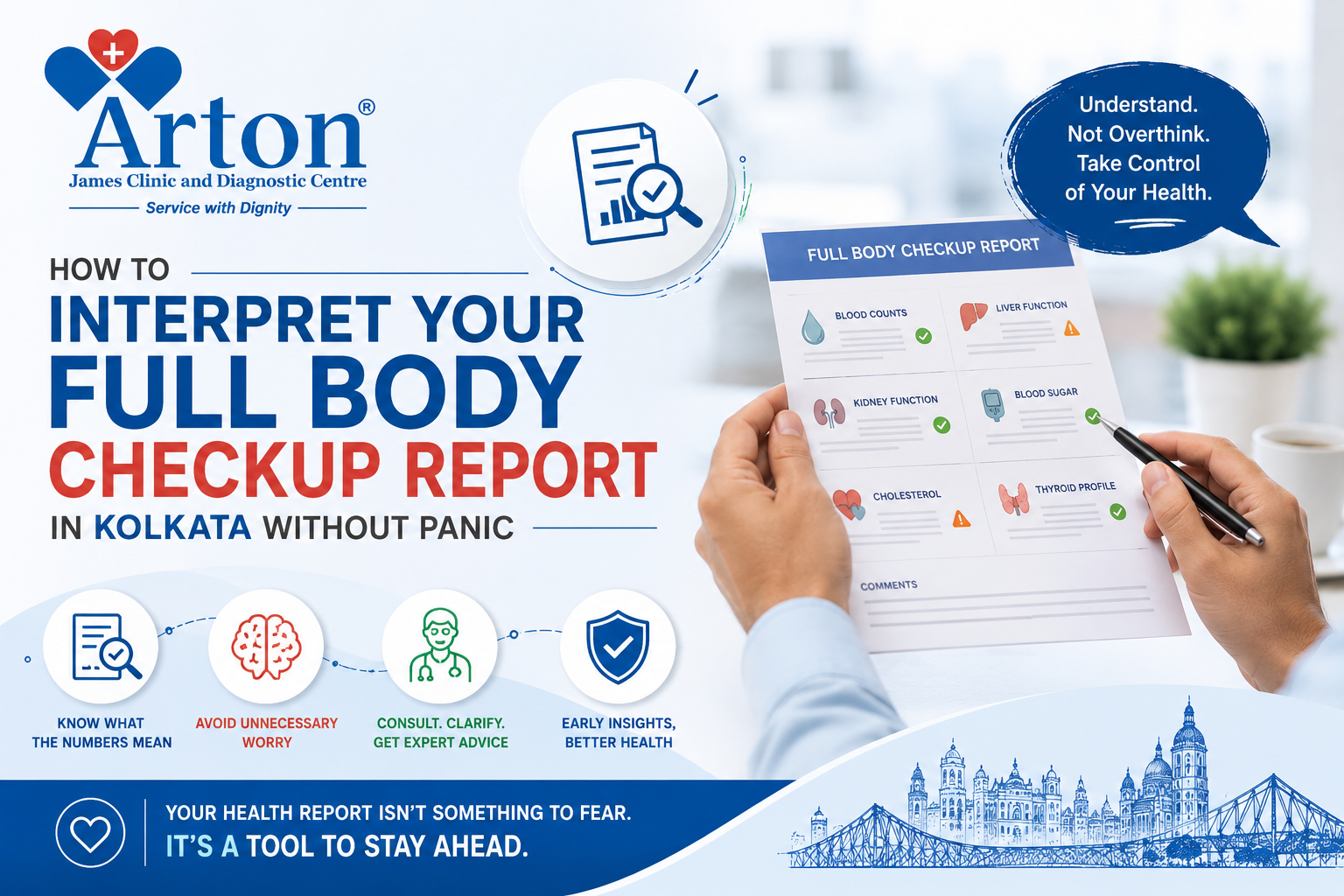
Not too long ago a retired schoolteacher came to see us. She was holding a bundle of papers like they were a court notice, her hands were trembling, just a little bit, you could see it. Her son had pushed her to get a Full body checkup in Kolkata, and now the report had three numbers marked in bold red, and she was dead sure something awful was hiding inside those pages. We sat down, I went through every line with her, and maybe fifteen minutes later she looked at me, sort of sheepish, and said “So I lost two whole nights of sleep because I ate a heavy dinner before the test?” That right there, that’s the reality of how most of us receive a health report. It’s why I want to walk you through reading yours without letting fear call all the shots.
Why “Abnormal” Rarely Means What You Think
It’s completely human, honestly, to get rattled when a document labels something as “abnormal.” The catch is, labs throw that word at anything that sits outside a pretty narrow population bracket. Your body isn’t a factory product; it has its own daily rhythms, and a single draw on a random Tuesday morning doesn’t capture that. I’ve seen someone’s kidney numbers shift from mildly high to perfectly fine just because the second test happened when they’d been drinking water all morning, not after avoiding fluids for twelve hours straight.
The Complete Blood Count (And Those Tiny Red Flags)
The first section that usually rattles folks is the complete blood count. A white cell count that’s a whisker above the top of the range often just means your body quietly fought off some tiny bug you never even registered. Maybe you had a slightly scratchy throat two nights before that went away by breakfast. Platelets can dip after a viral fever and then recover all on their own. I still think about a young guy who panicked over a borderline low haemoglobin, and it turned out he’d recently gone very strict with his vegan meals and simply needed to tweak a few things in his diet. That one short chat cleared everything up.
That Lipid Profile Panic
Then the lipid profile, which seems to scare almost everybody at some point. Triglycerides are especially jumpy. If your fasting wasn’t completely clean, maybe a milky tea slipped your mind, or the previous dinner was richer than usual, the number can shoot up dramatically. It’s not a sign of broken metabolism; it’s the test capturing a meal’s aftermath. Total cholesterol, too, asks for context. In an older adult a number that looks high on paper might be absolutely reasonable when you factor in age and overall risk. None of these digits live on an island.
When the Liver Numbers Shake You
The liver panel is, I’d say, the biggest sleep-stealer. The enzymes SGPT and SGOT are sensitive little markers, which is helpful, but they react to almost everything. A hard workout the day before, a couple of paracetamol for a headache, a festive dinner with a glass of something, all of that can create mild, temporary bumps. I’ve met so many people convinced their liver was in serious trouble, only to watch their levels settle within weeks of lighter exercise and fewer fried snacks. The liver is quite forgiving if you give it a chance to show that.
Kidney and Thyroid Surprises
Serum creatinine, the kidney parameter, is another common fright trigger. This value sways with your muscle mass and your water intake. A person with more muscle who hasn’t had much to drink before the blood draw will often show a slightly high creatinine, and that’s not kidney disease. Likewise, the thyroid number TSH can wobble with stress, the time of day, and even seemingly innocent supplements. Biotin, which shows up in many hair and nail formulas, can mess with thyroid tests and give odd results. A mildly elevated TSH alongside normal hormone levels generally means just keeping a gentle watch on things, not reaching straight for lifelong pills.
Imaging Words That Sound Scary
The imaging part of a Full body checkup in Kolkata comes with its own language that sounds far scarier than the truth. “Fatty liver grade 1” is so common now we almost expect it, and it reverses with steady weight loss and cutting back sugary stuff. “Few pus cells in urine” frequently signals nothing more than a not‑so‑perfect collection, especially if the sample wasn’t a clean midstream catch. Small, quiet kidney stones that cause zero pain may never need anything beyond staying well hydrated and checking once in a while. The report lists every finding it can; your doctor’s real job is to filter out what’s worth your limited worry.
The Results That Actually Need Quick Attention
There are, of course, results that deserve a quicker step. Fasting sugar sitting repeatedly above 126 mg/dL, a blood pressure reading that’s markedly up, or liver and kidney numbers that are several times the upper limit, those shouldn’t be put off. A shadow on a chest X‑ray that looks suspicious, or a noticeably high PSA, also needs a calm but timely follow‑up. Even then, the sensible reaction isn’t panic; it’s booking an appointment without delay. The whole point of preventive screening is to catch these whispers before they become shouts.
Walking Into the Doctor’s Room Differently
Something I’ve learned over many years is that how you walk into the doctor’s room changes the entire conversation. If you arrive clutching a list of worst‑case outcomes from a two‑hour internet dive, the visit becomes about managing fear instead of managing health. Instead, carry your report, maybe a small notebook with a few scribbled questions, and a rough idea of anything unusual around the testing days—poor sleep, a recent bug, new supplements. Rather than asking “Is this reading dangerous?” try “What does this pattern say, and what small step would you suggest next?”. That tiny shift turns a tense meeting into a genuinely helpful chat.
Small Changes, Big Shifts
Most borderline findings respond beautifully to easy, doable tweaks. A mildly elevated HbA1c can start nudging downward with a half‑hour walk after dinner and swapping a sweet treat for fruit a few times a week. Cholesterol numbers often soften when more fibre and movement slip into the daily routine. The real strength of a full body checkup isn’t about labelling you, it’s about handing you a map for the months ahead. It’s a conversation opener, not a final sentence.
A Final, Reassuring Thought
At Arton James Clinic & Diagnostic Centre, we’ve quietly made it our habit to never send someone away with just a printed report and a spinning head. There’s always a voice on the other side who explains what matters, what can wait, and what needs a light follow‑up. Numbers are just clues, and clues need someone who knows your story to read them well. If a report is sitting on your table stealing your peace, come have a chat with us. You can reach out through [Arton James Clinic & Diagnostic Centre](https://my.artonclinics.com/ ) and set up a conversation. Understanding your health grows best in a room where somebody listens carefully, offers a small smile, and says “This is really quite manageable.” That’s the kind of room we try to build every single day.
Your Health Deserves Expert Care